


 Contact Us


Key points of this article
- The proper operating pressure ensures safe and efficient use of the hose. Exceeding this range can lead to various problems due to ruptures or cracking.
- A hose’s pressure tolerance varies depending on the fluid and operating temperature, so selecting the right hose for the usage conditions is essential.
- Using pressure gauges and regulators to keep the hose operating pressure within the specified range can prevent various problems.
What does “proper operating pressure” mean?
Let’s start with a question for everyone from Hose Adviser Pro.

Why do hoses have a specified “proper operating pressure”?
Select from among A, B, and C below.
A. To control fluid temperature.
B. To ensure safe and efficient hose operation.
C. To adjust hose length.

The correct answer is B. To ensure safe and efficient hose operation.
The proper operating pressure defines the range in which the hose can be used safely and efficiently. The proper operating pressure is usually expressed in units of Pa (MPa, kPa, etc.).
Exceeding this range can cause the hose to rupture, possibly resulting in serious problems. To maintain safe and efficient hose piping, it is important to manage the pressure so that the fluid flows within the proper operating pressure range.
Some catalogs label this as “working pressure” or indicate a separate “rupture pressure.”
“Working pressure” is the typical allowable operating pressure under standard operating conditions.
“Rupture pressure” is the maximum pressure a hose can withstand before failing. For long-term safe use, the actual operating pressure should be only 1/3 to 1/5 of this value.
Another factor is “impact pressure,” a sudden spike that occurs when a steady-flowing fluid is abruptly stopped—for example, by a solenoid valve. Such spikes can reach three to four times the normal pressure. Systems with frequent impact pressures will need to be operated at a lower pressure.
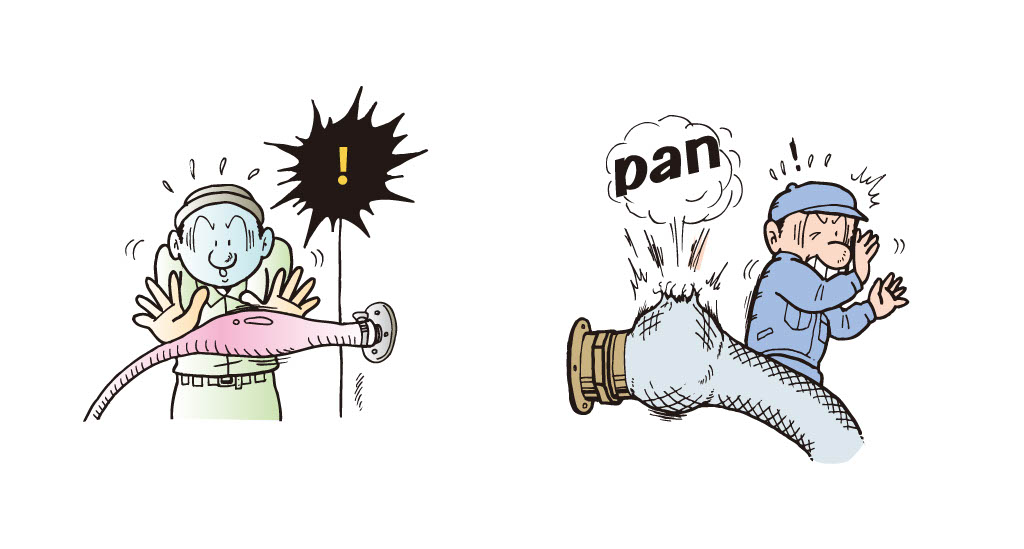
Selecting the right hose for the application and conditions, and using it at the proper operating pressure
Because a hose’s pressure resistance can change depending on the fluid, temperature, and environment, selecting a hose suited to the application and usage conditions is important.
For example, high-temperature fluids can harden or soften the hose, reducing its pressure resistance and increasing the risk of ruptures. Oils, chemicals, and UV exposure can also cause hoses to harden or degrade. To ensure the hose is suited to the application and usage conditions, always check the hose’s spec sheet for the operating temperature range, chemical resistance, and weather resistance. Doing so can help avoid problems before they occur.
Monitoring pressure continuously with gauges and regulators to maintain the proper operating pressure is another effective way to prevent problems in hose piping.
Toyox offers a wide lineup of hoses and couplings for various applications. Be sure to check the type and temperature of fluids being used, as well as the pressure, size, and length of hose required, and the necessary functionality when making your choice.
Registered members can also download Toyox’s latest selection guide to help you select products by application and fluid type. The guide also includes detailed on-site improvement examples.
Click the link below to register as a member.
That wraps up our look at proper operating pressure and preventing ruptures.
For any other inquiries or consultations, please contact the Toyox Customer Service Office.
Proper operating pressure is one of the key factors in ensuring safe, efficient hose piping. Every hose has a specified pressure range based on the application and conditions of use. Selecting the wrong hose or using the hose at an improper pressure significantly increases the risk of ruptures. In this article, Hose Adviser Pro will explain the importance of ensuring proper operating pressure.