


 Contact Us


Key points of this article
- Static electricity is generated due to friction between the hose’s inner lining and the fluid it carries, which can cause the hose to become clogged.
- There are two ways of preventing static electricity.
(1) Using hoses that contain an antistatic agent: Although effective, effects gradually diminish with use, requiring frequent hose replacement.
(2) Using conductive hoses: Recommended for food applications or when long-term effectiveness is required, as they can be grounded.
How is static electricity generated in hoses?
Now, here’s a question for everyone from Hose Adviser PRO.

What is the main reason static electricity builds up in hoses? Select from among A, B, and C below.
A. Hose pressure is too high
B. The hose is used in a low temperature environment
C. Due to friction between the hose inner lining and the fluid it carries

The correct answer is C. Due to friction between the hose inner lining and the fluid it carries.
Let’s take a closer look.
Static electricity is easily generated in resin materials such as plastic and rubber which have high insulating properties, as well as in fine textiles, dry powders, and similar substances. Hoses primarily made of resin materials also generate static electricity when fluid flows through rubs against the hose’s inner lining.
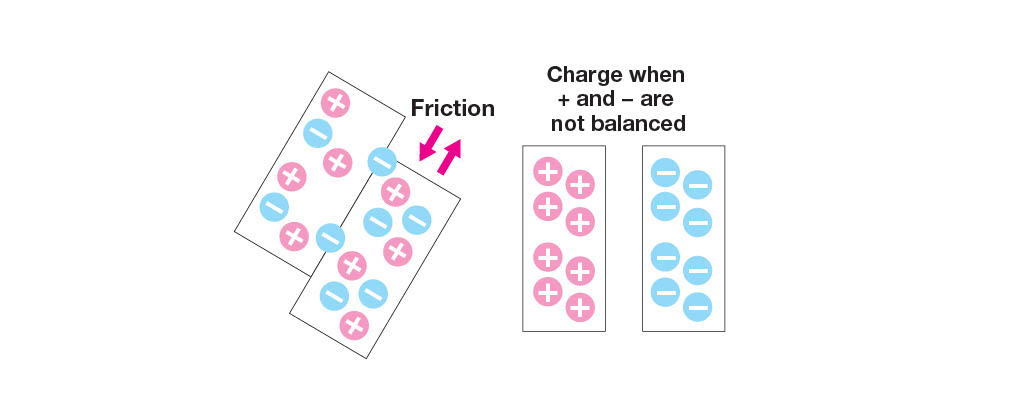
Static electricity that builds up on the inner lining attracts the materials flowing inside the hose and may cause them to adhere tightly to it. This can hamper fluid conveyance and cause hoses to become clogged. Because static electricity can generate sparks when discharged and potentially cause major accidents such as fires or explosions, proper countermeasures are essential.
What are some static electricity countermeasures for hoses?
There are two main ways of preventing static electricity in hose piping.
①Using hoses that contain an antistatic agent
② Using conductive hoses that can be grounded
①Using hoses that contain an antistatic agent
Antistatic agents are additives that prevents static electricity from building up in hoses. Using hoses that contain an antistatic agent can significantly reduce the buildup of static electricity, which in turn makes clogging less likely to occur. One major advantage is that piping can be protected from static electricity simply by connecting it to a coupling in the same manner as a normal hose. However, antistatic agents gradually dissipate over time as the hose is used, making it necessary for hoses to be replaced frequently. Another issue is that it is not possible to completely prevent static electricity. Furthermore, because antistatic agents may dissolve into the fluid, its use is unsuitable for food applications. Make sure to confirm operating conditions when selecting the hose.
②Using conductive hoses that can be grounded
Conductive hoses contain conductive materials, such as conductive thread or wire, through which electricity flows. By attaching special clips to both ends of the hose and grounding them, static electricity can be effectively prevented. Unlike antistatic agents, antistatic effects can be maintained for a long period, enabling the more reliable prevention of clogging.
However, because special clips must be attached to both ends, set up requires more work than a normal hose. Such hoses are suitable for hose piping that requires reliable and long-term static electricity protection, and for conveying powder in food and cosmetic applications.
①For conveying resin pellets ②For conveying heat-resistant resin pellets
③For conveying food powder and granular materials ④For conveying chemicals and solvents

①Model:TPE ②Model:TPE100C ③Model:TFE ④Model:FFE
* Special grounding clips are required for TPE, TPE100C, and TFE.
Toyox offers a variety of hoses that contain an antistatic agent, as well as conductive hoses that can be grounded.
Not only do these hoses prevent clogging, they also contribute to improving production efficiency, reducing product loss, and ensuring safety. Why not give them a try?

Antistatic hoses
Below is a list of hoses with high antistatic effects.
■ Click here for a video comparing antistatic effects
【For flour conveyance and antistatic hoses】Comparison of charged particles
■ Click here for a video explaining how to install grounding clips
Grounding Clip Mounting Method【TOYOTOP-E 100°C Hose &TOYOFOODS EARTH HOSE 】
That wraps up our explanation on key points for static electricity countermeasures for hoses.
For any other inquiries or consultations, please contact the TOYOX Customer Service Office.
Static electricity issues become more frequent during dry seasons, and when this static electricity builds up in a hose, raw materials start adhering to the inner lining, obstructing flow and causing clogs. Such clogging can be prevented by taking proper measures against static electricity, leading to stable production and more efficient work. In this article, Hose Adviser PRO will explain key points of static electricity countermeasures for increased productivity, work efficiency, and safety.